
The Hazards of Smokeless Tobacco

December 28th, 2016

Many smokers believe that chewing tobacco is a safer alternative to smoking cigarettes. This simply isn't the case! In fact, smokeless tobacco can cause serious health concerns.

Smokeless tobacco comes in many forms and goes by many names: dip, snuff, snus, or simply chewing tobacco. Use of these products usually involves sucking or chewing on shredded or loose tobacco leaves, sometimes flavored, for a prolonged period. There are even products that emulate a dissolvable candy-like consistency which are made of compressed tobacco powder.

What are risks and smokeless tobacco?

Whichever form a tobacco product takes, the dangers of using or consuming them is very real. According to a 2007 study by the World Health Organization's International Agency for Research on Cancer, there are upwards of 28 cancer-causing chemicals in smokeless tobacco that are known to cause cancer. And these products are habit-forming just like any other tobacco product that contains nicotine. Using them will increase your risk for many serious diseases including but not limited to: cancer (especially oral and esophageal), gum and heart disease, cavities, and pre-cancerous mouth lesions.

At the end of the day, long-term use of smokeless tobacco can cause serious health issues. These products really take a toll on both your oral and overall health. They put a strain on your immune system and make it less capable of warding off infection and disease.

Dr. Donald Neely and our team strongly advise you to stop using smokeless tobacco—or any kind of tobacco product—and not to pick up the habit if you aren't. There is no safe level of tobacco use, smokeless or otherwise.

Need to quit smoking or using smokeless tobacco products?

You can and should always talk to your doctor, healthcare practitioner, or Dr. Donald Neely for help quitting. But there are many other resources available today for those who'd like to quit. The National Cancer Institute offers information, support (local and online), and tools to help smokers and smokeless tobacco users quit. They offer live online chat with cessation counselors Monday through Friday and even have a smartphone application available to help people who are serious about quitting.

You can take a look at their website at smokefree.gov or call them toll-free at 1–877–44U–QUIT (1-877-448-7848). There is also help available from your state's quit line at 1-800-QUIT-NOW (1-800-784-8669).

Make the best choice for your health and well-being; avoid the bad habit of tobacco products. If you have any questions about how tobacco related products affect your oral health and hygiene, please don't hesitate to ask one of our Hanover, NH staff members.

How Your Pearly Whites Can Help You in Life

December 21st, 2016

At Hanover Orthodontics, Dr. Donald Neely and our staff have found that patients who like their smiles have better self-esteem. People who don’t like their smiles are often skittish about talking to other people. According to the National Women’s Health Resource Center, when women are asked about what they’d most like to change about themselves, many point to their smile. Despite wanting to change their smiles, quite a few of the people who are unhappy about that part of themselves won’t consider getting braces.

Most Americans Don’t Have Straight Teeth

The American Association of Orthodontics estimates that 4.5 million Americans wear braces or other orthodontic equipment to straighten their teeth and to get a healthier mouth. One in five of those braces wearers are women. The organization’s statistics also show that about 75 percent of the population doesn’t have straight teeth, and those people would benefit from getting braces.

While the main benefit of braces is straight teeth, and to improve the look of your smile, there are other benefits that make braces even more useful, including:

  • Straighter teeth help people chew better.
  • Straighter teeth give people a proper bite.
  • People speak better when they have straighter teeth.
  • When people have straight teeth, they have better overall gum and mouth health. A healthier mouth means flossing and brushing are easier, and that means your entire mouth stays healthy.
  • A healthy mouth is also linked to a healthy body.

When you feel proud of those pearly whites, you feel better about your smile, and that contributes to a better self-image and improved self-esteem. Ultimately, that can lead to greater career success and a more fulfilling social life.

What is early intervention?

December 14th, 2016

Many developing orthodontic problems can be intercepted and corrected if diagnosed and treated at an early age. Dr. Donald Neely and our team at Hanover Orthodontics recommend children have their first orthodontic evaluation no later than age seven, or younger if the front four permanent teeth have replaced the baby teeth. Early treatment, also known as interceptive treatment or Phase I treatment, provides both timely detection of problems and greater opportunity for more effective treatment. Early intervention guides growth and development, preventing serious problems later.

If your child is showing these signs, it may be time to think about early orthodontic treatment:

  • Early or late loss of baby teeth (your child should typically start losing teeth around age five or six, and will have all their permanent teeth in around age 12 to 13)
  • Difficulty chewing and/or biting
  • Mouth breathing
  • Sucking his or her thumb
  • Speech impediment
  • Protruding teeth (the top teeth and the bottom teeth extend away from each other)
  • Crowded front teeth
  • Teeth that don't come together in a normal manner or even at all

Early intervention will greatly reduce the severity of your child’s case, and therefore reduce the length of treatment time and cost for a second phase of treatment when all of his or her permanent teeth have erupted. An evaluation at our Hanover, NH office will determine if your child’s dental and skeletal growth is proceeding properly or if interceptive treatment is needed. Many times, a more severe problem can be corrected using sophisticated removable appliances instead of traditional orthodontic treatment.

To schedule a consultation for your child to visit with Dr. Donald Neely, please give us a call! We will provide your child with an initial exam, and discuss with you the best steps to take toward caring for your child's smile.

Are braces right for me?

December 7th, 2016

According to Preferred Consumer, it's estimated that 50 percent of people around the world have teeth that are crooked, not aligned properly, or irregular. Fortunately today, orthodontics has advanced to the point where corrective devices, such as braces and retainers, are less obvious, more comfortable, and can be worn for shorter periods of time.

So, with that being said, how do you know if braces are right for you? Typically your dentist will be able to point out any issues with your teeth at your regular six-month cleanings and recommend you to an orthodontist. But here are some other things to keep in mind when deciding whether or not braces could be in your future:

Crooked Teeth

As children grow, so do their teeth. And more often than not, certain teeth will grow in crooked. This isn't uncommon, as the majority of children will require some sort of teeth correction, whether that’s braces or retainers. Retainers are custom-made devices that either work to hold teeth in place or correct tooth alignment. They're often worn all day, aside from meals, at the start of the treatment period and then eventually are rolled back so they're just worn at night. Braces on the other hand are worn for at least a year and work to help straighten or position teeth.

Overbite or Underbite

The other main oral issue that orthodontics helps correct is uneven alignment, such as an underbite or an overbite. You might hear Dr. Donald Neely refer to this as a "malocclusion," which means "bad bite." Braces can help rearrange your alignment so an overbite or underbite is less of a problem. Typically after the braces come off for this sort of treatment, patients need to wear a retainer from Hanover Orthodontics to finish the treatment.

While braces are typically associated with dental issues in children, more adults are wearing the devices as well. About one in every five braces wearers are adults; a sign that it's never too late to correct any oral issues. Part of this is due to the technological advancements in orthodontics. For instance, new braces feel much better and come in a variety of styles — including clear — so they're far less obvious. Plus, the wires on braces are now made from advanced metals, which are stronger and lighter, so they get the job done much more efficiently. With so many people wearing braces these days, nicknames like "metal mouth" and "brace face" are almost a thing of the past. What's more, is that insurance plans are increasingly covering orthodontic treatment, making braces a much more feasible option for families on a budget.

When weighing whether or not braces are in your future, it's important to study all of your options about the styles of braces and what treatment option is best for you. Also be sure to contact your insurance provider to see what is covered and what will have to be paid out of pocket. It might take a few years of treatment, but braces can give you that winning smile for the rest of your life. Call our Hanover, NH office with any questions you might have!

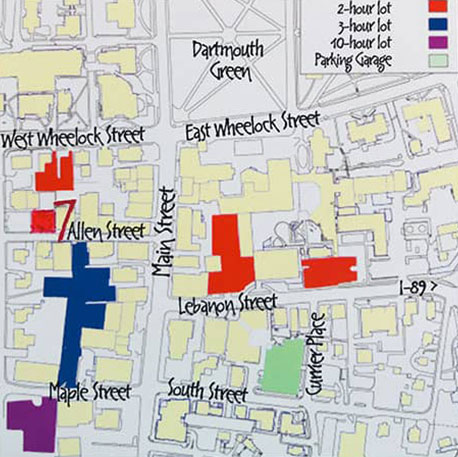
outside of office directions