
How to Avoid Delays During Your Orthodontic Treatment

February 22nd, 2017

Our patients at Hanover Orthodontics hate the thought of delaying their treatments and often ask us what they can do in between their adjustment visits to help. Today, Dr. Donald Neely and our team thought we would provide some tips on how you can stay on track in regards to your treatment plan time.

The first thing we want you to do is keep your adjustment appointments. Each visit with Dr. Donald Neely is carefully planned to move your teeth a specific way in a certain time frame. It’s important to note that missing an appointment can add weeks or months to your treatment time.

Next, we want you to let Dr. Donald Neely and our team know right away if your experience any problems with your braces or appliances. A missing wire, rubber band, or broken bracket can delay treatment time, so we ask that you please give us a call right away to report any issues rather than waiting until your next visit.

Make sure you wear your rubber bands as prescribed by Dr. Donald Neely. Most, if not all, of our patients will need to wear elastics or rubber bands at some point during their treatment. Not wearing the bands or elastics, or not wearing them enough, can slow down your treatment time. Rubber bands are critical in aligning your bite and are important for the bite-fixing phase of your treatment.

Finally, we want you to maintain good oral hygiene, just as you did before your treatment began. In addition to flossing regularly, we encourage you to brush your teeth several times a day. Not brushing will allow sugar to wear away the cement on the braces, making them less effective in moving your teeth, as well as elevate your risk of developing cavities or tooth decay, which will inevitably delay treatment time.

If you have any questions about any of these tips, or if you have any general questions about your treatment, please give us a call at our convenient Hanover, NH office, or ask Dr. Donald Neely during your next adjustment visit!

Permanent or Removable Retainers: Which is right for you?

February 15th, 2017

When the time comes for Dr. Donald Neely to remove your braces, it is very exciting. Unfortunately, it can be somewhat confusing, too, because you are faced with choosing between two kinds of retainers. Should you go with permanent, removable, or a combination of the two? It is always wise to follow Hanover Orthodontics recommendations, but knowing more about the two types of retainer beforehand can be helpful.

Removable Retainers

Removable retainers offer the advantage of easy use: you will generally put a removable retainer in at night and take it out in the morning. Regardless of your retainer schedule, you'll be able to enjoy some time with no retainer. However, a removable retainer can easily be forgotten at times, and this means you won't be taking full advantage of teeth retention.

Another potential advantage of a removable retainer is that you can take it out and brush and floss your teeth with ease, which is more of a challenge with a permanent retainer. Although removable retainers can be very effective, they don't tend to be as effective as permanent retainers, especially if they are not used as directed.

Permanent Retainers

Permanent retainers are the clear choice for patients who want to “get it and forget it.” Once your permanent retainer is placed in your mouth, you won’t need to worry about daily retainer schedules, since it is permanently affixed to your teeth.

Because teeth begin to shift naturally as we age, a permanent retainer typically offers better long-term results for teeth straightening than a removable one. You can't forget to put it in — it's already there! Temporary retainers get lost or are forgotten on trips, and often fail to get used as often as they should be.

One drawback to permanent retainers is flossing. Some patients find it more difficult to floss with a permanent retainer, but we can show you effective ways to floss fairly quickly with your permanent retainer.

Some orthodontists may recommend a combination of the two; for example, a removable retainer for the top teeth and a permanent one for the lower ones because the lower teeth are smaller and tend to shift more.

Ultimately, the most important thing to remember is that wearing your retainer as directed is extremely important. As long as you follow our orthodontist’s advice, you will get the best results from your retainer, regardless of its type. If you’re still not sure whether the choice you’ve made is truly right for you, get in touch with us at our Hanover, NH location right away!

When Clear Aligners aren’t the Answer

February 8th, 2017

Clear aligners like Invisalign® have become increasingly popular over the past several years and rightly so. They’re removable, easier to clean than braces, and hardly anyone knows you're wearing them. They are great in treating many cases, but they aren't for everyone.

Below, Dr. Donald Neely and our team cover some of the instances where clear aligners just aren't the answer:

  • If drastic tooth movement is required – Fixed appliances deliver much more significant tooth movement. So if your case is a drastic one, clear aligners may not be the best choice.
  • If you need to move molars – Molars have much stronger roots than your other teeth and would require significantly longer to move with clear aligners. A fixed appliance is the best choice in this instance, especially if you have a substantial overbite or underbite that needs to be dealt with.
  • If you're the type who often forgets or loses things –If you would forget to wear your aligners for the prescribed amount of time (usually at least 22 hours per day), clear aligners are probably not the best choice for you. Forgetting to wear them can delay treatment and even make it so you need to regress to the previous set of aligners to be able to move forward with treatment. And let's face it, if you're not careful, removable aligners are easy to lose. Losing aligners delays treatment and is expensive since you need to buy replacements to stay on course. Replacing a lost set of aligners usually takes between seven and ten days—a definite setback in treatment.
  • If you're looking for the fastest treatment possible – Clear aligners usually can't move teeth as quickly as fixed appliances. So if you're looking for the fastest way to achieve your desired result, clear aligners may not be the best bet.

Feel free to talk with Dr. Donald Neely about your options regarding braces and clear aligners. We know there are pros and cons to both, so let’s find the option that works best in your life and for your specific needs in terms of treatment. Schedule an appointment at our Hanover, NH office today!

Five Tips in Caring for Your Braces During Orthodontic Treatment

February 1st, 2017

After getting your braces, it is important to know how to take care of your teeth in order to ensure that your braces stay intact and do their job so that your teeth are in top-notch condition after you complete your orthodontic treatment. Today, our team at Hanover Orthodontics thought we would provide you with five tips you need to know to ensure you undergo successful treatment at our Hanover, NH office.

Flossing
Flossing twice a day or after every meal can help you clean areas between teeth and other places a toothbrush can miss. We also recommend using a floss threader, which can be used to help you navigate safely around your braces and brackets. It is vital to floss twice a day, preferably after lunch and before bedtime to keep gum disease and tooth decay at bay.

Brushing
Teeth and appliances should be brushed after every meal and before bedtime using fluoride toothpaste and gentle, soft strokes. We recommend using an interdental toothbrush, which can help you clean the hard-to-reach areas under wires better than an ordinary toothbrush.

Using Elastics
This phase of orthodontic treatment requires cooperation and consistency on your part. If your orthodontist has prescribed elastics, make sure they are worn at all times, except when eating meals or brushing teeth. It’s important that you wear the correct size elastics and have extras in case they are misplaced. By failing to wear your elastics for even one day, you run the risk your teeth moving back toward their original position.

Addressing Damage to Your Braces
In case your appliances are damaged, we ask that you call our team at Hanover Orthodontics immediately to set up an appointment.

Eat Friendly Foods
When undergoing treatment, there are certain foods you must avoid. Foods that are hard, sticky, chewy or sour can add months to your treatment time. These includes gum, caramels, taco shells, nuts, ice, chips or hard candies.

We hope that helps! If you have any questions, please give us a call at our Hanover, NH office or ask us during your next adjustment appointment!

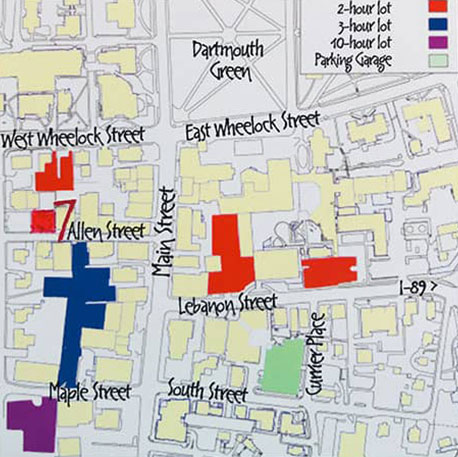
outside of office directions