
What happens if I have an orthodontic emergency while I'm on vacation?

March 22nd, 2017
At Hanover Orthodontics, there are a few things we want to remind you of when you're on vacation, so that a day with friends and family won’t be spent dealing with an orthodontic emergency. Firstly, we are here for you whether you are in town or out of town on vacation. Give us a call and we may be able to address the problem over the phone. Second, if we are unable to help you fix the problem over the phone, we will help you find an orthodontic practice in your vacation area that can help you.

If you experience problems reaching our office, we suggest going online and searching for orthodontic practices in your area. Most orthodontists will lend a helping hand to another orthodontic patient and get them out of pain or discomfort.

If you have braces, whether they are metal, ceramic, or lingual, Dr. Donald Neely and our team suggest steering clear of the following foods to avoid broken brackets and/or wire distortion while you are on vacation:

  • Chewy, sticky, or gummy food
  • Apples, pears and other whole fruits (cut fruit into thin wedges before consuming)
  • Bagels and hard rolls
  • Bubble gum
  • Corn on the cob
  • Hard candies
  • Hard cookies
  • Pretzels
  • All varieties of nuts, including peanuts, almonds, and cashews

Finally, if you have clear aligners and you lose your tray, don’t worry! Simply put in either the previous tray or the next tray and contact us as soon as you get home!

Follow these tips and you can have a worry-free vacation!

St. Patrick's Day

March 15th, 2017

On March 17, everyone has a little Irish in them. St. Patrick’s Day is a joyous celebration of Irish heritage. The holiday originated as a commemoration of Saint Patrick, who brought Christianity to Ireland. The saint arrived in Ireland in 432 and earned the reputation of a champion of Irish Christianity. March 17th, the day of St. Patrick’s death, has been commemorated by the Irish for over 1,000 years. St. Patrick’s Day is still observed as a religious feast day by several Christian denominations, but it is better known in the public imagination as a rich celebration of Irish culture.

St. Patrick’s Day has been an official public holiday in Ireland since 1903. Each year, the Irish celebrate with a several-day festival that includes theater performances, music, fireworks, and festive parades. The celebration is also a public holiday in Northern Ireland, Montserrat, and Newfoundland and Labrador. In other parts of the world with heavy Irish populations, it is an unofficial celebration of Irish heritage. Parts of Great Britain, Canada, Argentina, South Korea, Switzerland, New Zealand, the United States, and Australia commemorate the holiday each year. Typical celebrations in these countries include drinking green beer, wearing green, eating traditional Irish foods, parades, and shamrock decorations.

Many people, Irish and non-Irish alike, take part in the “wearing of the green” on St. Patrick’s Day. In fact, the color originally associated with Saint Patrick was blue. His use of shamrocks to explain the Holy Trinity to the Irish made the green clover emblematic of the holiday, leading to the traditional green attire worn by thousands on St. Patrick’s Day. Other little-known facts about St. Patrick’s Day include the following:

  • Each year, the United States and Ireland face off in a rugby competition called the “St. Patrick’s Day Test.”
  • Montreal celebrates the holiday with an annual parade, which has been held each year since 1824. The Montreal city flag even features a shamrock in its corner, as a nod to its Irish heritage.
  • The Guinness World Records named St. Patrick’s Day the “Friendliest Day of the Year.”
  • Along with Valentine’s Day, St. Patrick’s Day is one of the most widely celebrated saint’s day in the world.

No matter your cultural heritage, St. Patrick’s Day is a great time to let loose and celebrate your inner Irish-ness! Don your greenest attire and exclaim “Erin go Bragh!” (Ireland forever!) to everyone you meet. From Dr. Donald Neely - have a great St. Paddy’s day!

What is dentofacial orthopedics?

March 8th, 2017

You may have noticed that we specialize in orthodontics and dentofacial orthopedics. And while most people we talk to have heard of orthodontics, many are confused by the dentofacial orthopedics part of the title. Today, Dr. Donald Neely and our team thought we would explain the difference.

While orthodontics entails the management of tooth movement, dentofacial orthopedics involves the guidance of facial growth and facial development, which occurs for the most part during childhood, and is a reason why kids are often the best candidates for receiving dentofacial orthopedic therapy. Dr. Donald Neely will examine and monitor your child’s growth to determine when starting treatment will be most effective. If your child begins orthodontic treatment before his or her adult teeth have erupted, it is known as Phase-One treatment. During this phase, Dr. Donald Neely will use treatments designed to correct your child’s jaw growth and make sure that the jaw bone is properly aligned before beginning the next phase of treatment, which usually involves placing braces to straighten your child's teeth.

Dentofacial orthopedics is also used to treat adult patients at Hanover Orthodontics, however, this process may involve surgery. With our younger patients, we know the jaw bones are still forming, making it easier for our team at Hanover Orthodontics to control bone growth and tooth movement. Adults, however, are a different story; their bones are no longer growing, and their jaw bones have hardened, so it is more difficult to adjust the bite and move teeth into proper alignment. Dr. Donald Neely may recommend surgery to adjust the jaw bone and establish the proper bite alignment before beginning treatment.

Because our team at Hanover Orthodontics is skilled in both areas, we are able to diagnose any misalignments in the teeth and jaw as well as the facial structure, and can devise a treatment plan that integrates both orthodontic and dentofacial orthopedic treatments.

We hope that helps! To learn more about dentofacial orthopedics, and to find out if this type of treatment is right for you, please contact our Hanover, NH office and schedule an initial consultation for you or your child. It’s never too late to get a great smile, and we can’t wait to help you or your child get started.

What is malocclusion?

March 1st, 2017

The term malocclusion refers to misalignment of teeth. You may have been born with malocclusion, so your teeth simply grew in crooked, or the misalignment and crowding of your teeth occurred over a period of time. Either way, not only can malocclusion pose cosmetic issues, but it can have a negative effect on your speaking and eating abilities as well.

Types of Malocclusion

Malocclusion encompasses multiple types and classifications of misalignment issues, including twisting or rotation of the teeth and molars that do not meet when you bite down. In some cases, the top front teeth are pushed outward in an upper protrusion.

In other cases, a misplaced midline results when the front top teeth don’t meet with the front bottom teeth. Transposition occurs when teeth protrude through the gums in a position where another tooth is supposed to be.

Practically any type of crowding or spacing issues, rotation or twisting of the teeth, or bite problem – including overbite, underbite, open bite, or crossbite – is included under the umbrella of malocclusion.

Malocclusion Classifications

There are three classifications of bite or misalignment problem.

  • Class 1 malocclusion: While the bite may be normal, the upper teeth overlap the lower teeth slightly. This is the most common type.
  • Class 2 malocclusion: Known as overbite or retrognathism, class 2 involves a severe overlap of the upper teeth and jaw over the bottom teeth and jaw.
  • Class 3 malocclusion: Known as underbite or prognathism, class 3 occurs when the lower teeth and jaw overlap the upper teeth and jaw. Thus, the lower jaw juts forward.

Causes of Malocclusion

The most common cause of malocclusion is genetics. However, there may be other causes, including the development of abnormally-shaped teeth, lost teeth, or impacted teeth; thumb sucking or overuse of a pacifier as a small child; having fillings or crowns that do not fit correctly; a serious injury that causes misalignment of the jaw; or developing a tumor of the mouth or jaw.

Treating Malocclusion

Orthodontic care at Hanover Orthodontics with Dr. Donald Neely is the main treatment available for malocclusion, which includes getting braces, Invisalign, or other corrective treatments. Treatment is ideal not just to have your smile improved, but because it makes the teeth easier to clean and maintain, lowers the risk of gum disease and tooth decay, and can even take pressure off the jaw and teeth.

Think about orthodontic treatment if you (or your child) display any signs of malocclusion. Early treatment of malocclusion during childhood can lessen expensive treatment later on.

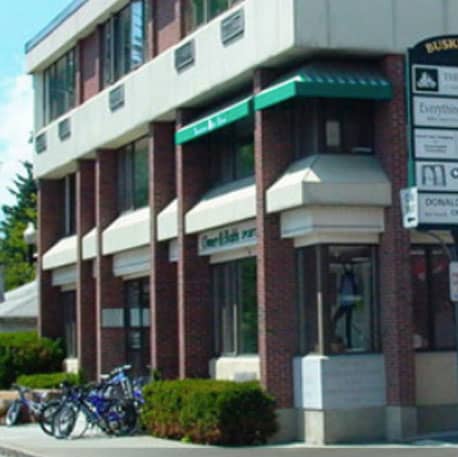
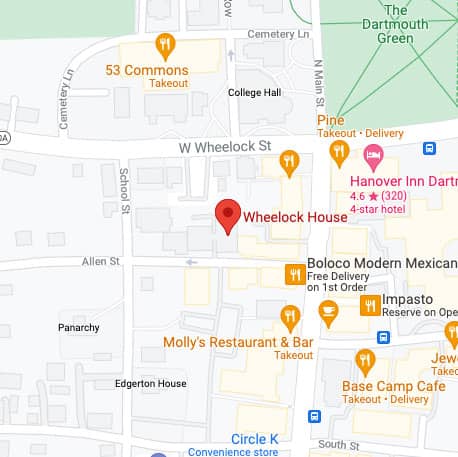
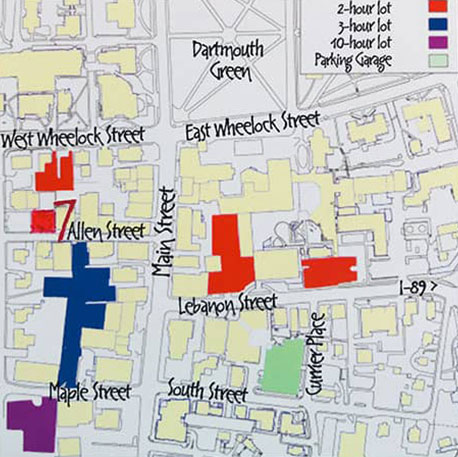
outside of office directions