

To use or not to use mouthwash; that is the question

April 8th, 2020
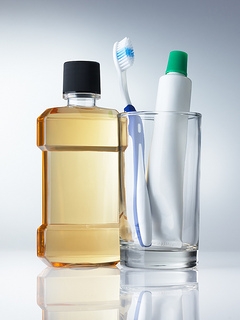
A famous mouthwash company chose the marketing slogan, “Better than flossing.” As a consumer, would you believe a high-end commercial that essentially tells you to stop flossing? Just use this brand of mouthwash and the risk of gingivitis, cavities, etc., is gone. What a wonderful idea! Now for the reality: This is simply not true.

The company that made these claims received some negative feedback for making this false claim. Does this mean that all mouthwashes are ineffective? Absolutely not. It takes a little bit of research to know which mouthwashes are most effective and best suited for you. Here are some key points to remember when choosing a mouthwash.

First, think about why you want to use a mouthwash. If you are at high risk for cavities, you would benefit from a fluoride mouthwash. Check the labels to see which ones contain fluoride.

If you have active gingivitis, a mouthwash with some antibacterial properties would be preferable. Read the labels carefully. You do not want a mouthwash containing alcohol. If you have active periodontal disease, an antibacterial mouthwash is appropriate, though you may want to discuss which kind would be best for your individual needs.

Prescription mouthwashes are also an option. You should pay close attention to the directions, such as how much and how long to use them. There is one brand in particular whose effectiveness can steadily diminish if you use it continually. There can also be side effects you should discuss with our office and/or your pharmacist.

Some great mouthwashes for kids change the color of plaque on their teeth to help them see how they are doing with their brushing. This is a great learning tool for the child and the parent! Why not pick up a bottle for yourself next time you’re at the store and evaluate your own performance?

Beware of claims that a mouthwash can loosen plaque. This is not accurate. Beware of any mouthwash that has alcohol. This is worth mentioning twice. Take care of your taste buds. If you are using a strong mouthwash, it can reduce your sense of taste.

These tips should help you choose the right mouthwash for your needs. Please contact Dr. Donald Neely at our Hanover, NH office with any specific questions!


What is a palatal expander?

April 1st, 2020

Orthodontists like Dr. Donald Neely recommend a first orthodontic visit and evaluation for your child around the age of seven. We will evaluate your child’s jaw and facial development and make sure that there is enough room in the mouth for the permanent teeth when they arrive. One of the recommendations we might make for early treatment is the use of a palatal expander. If you are unfamiliar with this device, let’s take a closer look at why it’s necessary and what exactly it does.

Why do we recommend the palatal expander?

There are two dental arches, composed of the upper and the lower teeth, in your child’s mouth. This arch-shaped design is meant to accommodate all the permanent teeth. Further, when the upper and lower teeth meet, they should result in a healthy occlusion, or bite.

Sometimes, the upper dental arch is simply too small to accommodate all of your child’s permanent teeth, leading to crowding, extractions, and impacted teeth. Also, a too-narrow arch can result in a crossbite, where some of the upper teeth bite inside the lower ones. An improper bite can lead to problems such as TMJ (temporomandibular joint) disorder, improper wear and stress on teeth, certain speech difficulties, and other potential complications. The palatal expander was designed to prevent these problems from occurring.

What is a palatal expander and how does it work?

The expander itself is a device that increases the size of the upper dental arch. Before your child’s bones are finished growing, the space between the two bones of the upper palate is filled with cartilage. This tissue is flexible when children are young, but gradually fuses solidly into place by the time they are finished growing (usually in the early to mid-teens). If the arch can be widened to accommodate the emerging permanent teeth, or to reduce malocclusions, this improvement can also affect the need for, and length of, future dental work.

There are several types of expanders available at our Hanover, NH office. These are custom-made appliances, commonly attached between the upper teeth on each side of the jaw. The two halves of the device are connected with a screw-type mechanism that can be adjusted to widen the upper palate and dental arch with gentle pressure. This is a gradual process, with small adjustments usually made once or twice a day to slowly move the bones further apart. As weeks go by, you will notice a successful change in the spacing of the teeth. Your child might even develop a gap in the front teeth, which is normal and will generally close on its own.

If you would like more detailed information, talk to Dr. Donald Neely about the palate expander. We can tell you what to expect from this treatment if we think it is best for your child’s unique needs, and how to make it as easy as possible for your child. Our goal is to provide your child with the healthiest teeth and bite possible, always making use of treatments that are both gentle and effective.

Which type of mouthwash is best?

March 4th, 2020

Taking care of your oral health involves a daily regimen of brushing, flossing, and rinsing to prevent tooth decay and bacterial infections. Though you may have asked us which toothbrush to use, few patients at Hanover Orthodontics ask about mouthwash.

However, different mouthwashes you might choose will have varying effects on your oral health. So which type is best for you?

Gum Health

Antiseptic mouthwashes are designed to reduce the majority of bacteria on and near the gum line. Using an antiseptic mouthwash can help decrease your chances of developing gingivitis. If possible, look for a mouthwash with antibacterial or antimicrobial ingredients.

Fluoride

Fluoride is beneficial for oral health and can help prevent tooth decay. If you drink a lot of bottled water without fluoride, we may recommend that you purchase a rinse with fluoride in it.

Bad Breath

Although mouthwash is designed to prevent bacterial build-up within the mouth, many people use it to combat bad breath. Most mouthwashes will help eliminate the bacteria that cause bad breath, and some are specifically designed to do so.

However, if bad breath is a chronic problem that requires daily treatment with a mouth rinse, contact Hanover Orthodontics to discuss your symptoms.

American Dental Association Approval

The ADA reviews mouth rinses for safety and effectiveness. A mouthwash with the ADA Seal of Approval will meet strict criteria, and will have scientific evidence or clinical studies that support the claims of the manufacturer. If possible, select a mouthwash that bears the ADA Seal of Approval to ensure you are using a quality rinse.

Considerations

If you are unsure as to which mouthwash is right for you, contact our Hanover, NH office or ask Dr. Donald Neely during your next visit. Also, be sure to keep mouthwash out of the reach of children, as it contains alcohol and other substances that could be harmful to them. Avoid letting children under age six use a mouth rinse, and discontinue use if you experience a burning sensation in the soft tissues of your mouth.

Not-So-Sweet Sweets

February 26th, 2020

Birthdays. Valentine’s Day. Halloween. A trip to the movies. There are just some occasions where a sweet treat is on the menu. Now that you are getting braces, does that mean you have to give up desserts completely? Not at all! The trick to finding the right treat is to know which foods are safe for your braces and which should wait until your treatment is complete.

There are some foods which should always be avoided. They fall into three main categories:

  • Hard and Crunchy

Hard candies, peanut brittle, popcorn balls, nutty candy bars—anything that is hard to bite into is hard on your braces, and can damage brackets or even break them.

  • Chewy

Caramels, taffy, chewy squares and rolls, licorice and other super-chewy candies can break brackets and bend wires. Not to mention, they are really difficult to clean from the surface of teeth and braces.

  • Sticky

Soft foods are generally fine, but soft and sticky candies are another thing entirely. Gumdrops, jelly beans, most gum and other sticky treats stick to your braces, making it hard to clean all that sugar from around your brackets. And even soft sticky candies can bend wires or damage your brackets.

As you have probably noticed, almost all candy falls into one of these categories. Of course, while sugary treats shouldn’t be a major part of anyone’s diet, and careful brushing and flossing are always on the menu if you do indulge, wearing braces does not mean giving up on treats entirely. A better alternative when you are craving something sweet is to choose something that avoids crunchy, chewy and sticky hazards, such as soft puddings, cupcakes or cookies. There are even some candy brands that are safe for your braces.

Talk to Dr. Donald Neely the next time you visit our Hanover, NH office about the dos and don’ts of desserts—we have tasty suggestions that will make those special occasions both sweet for you and safe for your orthodontic work!

outside of office directions