

How to Protect Your Braces During Sports Activities

February 5th, 2015

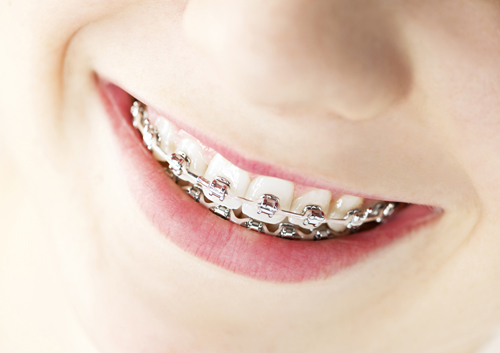
Proper mouth protection is recommended by Hanover Orthodontics when you participate in any sports activities. If you wear braces, this protection becomes essential. Injuries to your mouth can not only damage your teeth, but your braces could break and cut open your lip.

Full Facial Guards

Full facial guards are often used in football and offer protection to your mouth from most injuries. Even with full facial protection, you may benefit from additional mouth protection. While your face is protected from outside impact, you could still suffer from cuts or damage to your braces from internal impact.

Mouthguards

Mouthguards referred to as boil-and-bites can be purchased at many retail stores. As the name implies, these guards are boiled in water to heat and soften the material. While the guard is still warm, you place it in your mouth and bite down gently. This causes the guard to form to the shape of your mouth. Unfortunately, these guards do not necessarily offer the best protection or fit.

Dr. Donald Neely can make custom mouthguards specifically for you. The custom fitting ensures you of better protection and a comfortable fit. Custom guards are also built in layers for durability. The American Dental Association recommends custom guards for orthodontic patients. Your mouthguard will be designed to provide proper protection for both your teeth and your braces.

No matter what type of sport you participate in, a mouthguard can protect your braces. Even an activity as seemingly harmless as table tennis can result in a contact injury. The Academy for Sports Dentistry states that a properly fitted mouthguard should not interfere with any athletic activity.

Hanover Orthodontics will provide you with properly-fitting mouth protection to ensure the safety of your braces and your teeth. We will be glad to answer any questions you have so you can continue the activities you enjoy with little concern. If you do suffer any injuries to your mouth or braces during sporting activities, please contact us immediately. The sooner we can care for your mouth, the better the results will be.

Smile with Invisalign Teen®!

January 29th, 2015

Invisalign Teen is designed with today’s youth in mind. These clear, removable orthodontic aligners can straighten your teeth without the need for metal wires and brackets. Unlike traditional braces, Invisalign Teen aligners are comfortable, nearly invisible, and removable, which allows you to remove them as you eat your favorite foods and brush and floss your teeth. Invisalign Teen motivates teenagers to enjoy life without restrictions while promoting better overall dental care.

Key features of Invisalign Teen

Teenagers are constantly on the move and require special options when it comes to their braces. Invisalign Teen utilizes the same technology as Invisalign for adults; they consist of a series of clear plastic aligners that gradually move the teeth. Extra features designed especially for teens include:

  • Blue wear-indicators on the aligners that gradually fade from blue to clear to help you, and our team, gauge wear time
  • Aligners designed to compensate for the growth of molars and new teeth
  • Customization to fit your mouth correctly and comfortably
  • Removable and nearly transparent to ensure you can eat with freedom and smile with confidence
  • Six free individual replacement aligners in the event that your aligners become misplaced or lost

Conditions improved by Invisalign Teen

Between 70 and 80 percent of adolescents in the United States require braces, according to the American Association of Orthodontists (AAO). Invisalign Teen uses advanced technology to treat a broad range of orthodontic conditions. These include overbite, underbite, crossbite, widely-spaced teeth, and overly crowded teeth. Injuries and tooth and jaw problems may also require the use of braces to correct jaw and teeth alignment problems.

How does Invisalign Teen work?

Like any orthodontic treatment, Invisalign Teen requires a customized treatment plan created by Dr. Donald Neely. Generally, each set of aligners is worn for approximately two weeks and removed when you brush, floss, eat, and drink. Your teeth will gradually move with the series of aligners, which typically ranges from 18 to 30 aligners in total. You’ll visit our Hanover, NH office every eight to ten weeks to check your progress and make any needed adjustments.

Invisalign Teen introduces a whole new way to make your smile straight without the unappealing look and hassle of traditional metal braces. This revolutionary method of correcting smiles is being used by teens everywhere, including right here at Hanover Orthodontics, to straighten their teeth with confidence.

Orthodontics and Whole Body Health

January 22nd, 2015

In recent years, many links have been established between orthodontic treatments and whole body health. According to the National Institute of Dental and Craniofacial Research, researchers have observed that people with gum disease are more likely to develop heart disease or experience difficulty controlling blood sugar than people without gum disease. While researchers continue to find associations between oral health and the overall health of the body, as of yet it hasn’t been determined whether gum disease is the sole cause of these health conditions. What can be determined, however, is that good oral health isn't just about maintaining a healthy smile; it has an impact on the health of your entire body.

The associations between gum disease and whole body health

The links between the health of your mouth and the health of your body are too many to ignore. Is it a coincidence that gum disease and other health problems occur together? Researchers don’t think so, despite the lack of definitive proof.

Here are four possible connections between the health of your mouth and the health of your body.

  • Excessive oral inflammation has been linked to a greater incidence of clogged arteries.
  • The American Society of Microbiology has revealed that certain types of oral bacteria can infect the arterial cells and weaken the wall of the heart.
  • Loose teeth are often believed to be a warning sign for osteoporosis, a disease that causes the bones to become less dense.
  • Some studies suggest women with gum disease are more likely than those without gum disease to deliver preterm, low-weight babies.

Orthodontics and gum disease

So what does undergoing orthodontic treatment at Hanover Orthodontics have to do with gum disease? Braces do so much more than give you a nice-looking smile. Quite simply, straight teeth are easier to keep clean than crooked teeth. Your toothbrush is able to remove more plaque-causing bacteria, and your floss is more effective at ridding tiny particles between your teeth.

Despite the lack of hard facts in these findings, the message is clear: If you improve your oral health, you will also have a greater chance of maintaining the health of your entire body. And that’s a chance Dr. Donald Neely and our team at Hanover Orthodontics believe is worth taking. For more information about this topic, please give us a call at our convenient Hanover, NH office or ask Dr. Donald Neely during your next visit!

What is hyperdontia?

January 15th, 2015

When a child is born, he or she will have 20 primary teeth and 32 permanent teeth. But sometimes kids are born with additional teeth, and our team at Hanover Orthodontics calls this oral condition "hyperdontia." Primary teeth are the first set of teeth that erupt in your child's mouth, typically by the time they are 36 months old, and are shed by the time your child reaches the age of 12. Permanent teeth then take the place of the primary teeth and are usually fully-erupted by the time your son or daughter reaches 21 years of age. Anyone who develops more than 20 primary teeth or more than 32 permanent teeth has hyperdontia, and the additional teeth are referred to as supernumerary teeth.

While the cause of hyperdontia is not entirely clear, it is believed that there may be a genetic factor. Oral professionals have found that patients with extra teeth often have syndromes like cleidocranial dysplasia, Ehler-Danlos syndrome, Gardner syndrome, or cleft lip and palate. The prevalence of hyperdontia affects between one and four percent of the population in the United States, and the majority of cases are limited to a single tooth.

So, what is the best way to deal with hyperdontia? It really depends on the case. The treatment plan your doctor suggests varies according to the potential problem posed by the supernumerary teeth, as well as their type. Orthodontic treatment may certainly may help, but extraction can also be a good option. We recommend that children receive an oral evaluation or checkup no later than the age of seven. In addition to hygiene evaluation, this helps ensure your child does not experience hyperdontia problems.

If you suspect you or your child may be suffering from hyperdontia, please give us a call to schedule an appointment at our convenient Hanover, NH office to be evaluated.

outside of office directions