
Invisalign® Q&A

March 5th, 2015

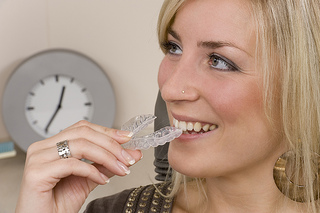
It’s estimated that up to four million people at any one time are wearing braces in the United States and Canada. But Dr. Donald Neely and our team at Hanover Orthodontics know that braces have come a long way from the early days of orthodontics, so much so that these days, options are available that are not visible to onlookers. The most popular of these “invisible” braces is Invisalign. Here’s a list of FAQs regarding Invisalign:

Are they really invisible?

Yes, the clear liners are virtually invisible, so they enable patients to feel good about themselves and their appearance, while getting the orthodontic treatment they need.

Are there wires, rubber bands, and brackets with Invisalign?

Nope. Invisalign is truly an alternative to conventional braces. The treatment consists of clear liners that can easily be removed and cleaned throughout the day. There are no wires, so there’s less poking and mouth irritation compared to braces. There’s also no wire tightening at adjustment appointments, so patients don’t have to worry about a sore mouth in the days that follow in-office visits.

I’ve heard that if I get braces, I won’t be able to eat certain foods like popcorn and hard candy. Is this true with Invisalign too?

No. With Invisalign, there are no food restrictions. You simply remove your aligners when you’re eating, and replace them after you’ve finished and brushed any leftover food particles away.

Does Invisalign cost more than braces?

While overall cost varies on a patient-by-patient basis and is based largely on the level of treatment, Invisalign costs about the same as traditional braces, which makes this treatment option a truly affordable alternative.

How does brushing compare with conventional braces?

Brushing your teeth while wearing conventional braces takes some getting used to. Patients have to brush around the metal brackets and floss with a specialty tool to get into the hard-to-reach areas of the mouth. By contrast, Invisalign can be removed at any time to permit regular brushing and flossing.

Every patient is different and Invisalign might not be the best course of orthodontic treatment for everyone, but it's an option that's gaining more and more popularity, and it's an orthodontic alternative that doesn't sacrifice comfort and convenience for results. For more information, or to schedule a consultation, please give us a call at our convenient Hanover, NH office!

Your Five-Step Guide to Preventing Tooth Decay While Wearing Braces

February 26th, 2015

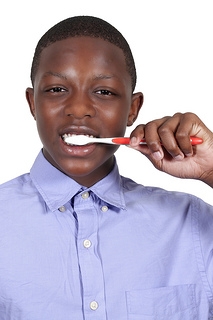
If you’re wearing braces, then you know they are working hard to straighten your teeth. However, those hard-working braces are also preventing you from easily cleaning your teeth. It is essential that you put some extra attention into preventing tooth decay while wearing your braces. When your braces are finally removed by Dr. Donald Neely, you want a beautiful, white smile, not decayed or stained teeth. Here, we’ve listed the five best ways to ensure you have the smile you’ve always dreamed of once your braces are gone.

Use a Special Toothbrush

A regular toothbrush just doesn’t cut it when you are wearing braces. You also need to use an interdental toothbrush so that you can effectively clean behind the braces. This type of brush has bristles that are shaped like a Christmas tree that can remove food residue in the braces and on the teeth. We also recommend using a WaterPik, with its highly pressurized pulsating water, to help get all of those hard-to-reach places.

Brush after Every Meal

Since braces block food from naturally escaping your teeth after eating, it’s important that you take the time to brush and floss after every meal. The less time food has to sit on your teeth, the less likely it is to cause decay. This may seem like an inconvenience, but trust us, when you get your braces off, you will be very glad you brushed after every meal.

Don't Forget the Mouth Rinse

Even after properly brushing and flossing, there are probably some food particles in your braces. A fluoride mouth rinse is the best way to ensure that every bit of food is removed after meals. If you do not have a mouth rinse available, we suggest using water — it’s better than nothing.

Avoid Sweets

Prevention is definitely the best medicine when it comes to avoiding tooth decay. If you can nix decay-causing sugary foods from the outset, we promise you’ll spend less time trying to treat problems in the future.

Get Regular Checkups

Visit your dentist regularly while you are wearing braces. Our office recommends a thorough cleaning every three to six months. Let our Hanover, NH office know if you have questions about your oral health while in braces - our entire team at Hanover Orthodontics is here to make sure your teeth are as beautifully straight as they are healthy!

What is a water pick and do I need one?

February 19th, 2015

Water picks, sometimes called “oral irrigators,” make an excellent addition to your regular home care regimen of brushing and flossing. Especially helpful to those who suffer from periodontal disease and those patients of ours undergoing orthodontic treatment with full-bracketed braces, water picks use powerful tiny bursts of water to dislodge food scraps, bacteria, and other debris nestled in the crevices of your mouth. Children undergoing orthodontic treatment may find using a water pick is beneficial if their toothbrush bristles tend to get caught on their wires or brackets.

When you use a water pick, you’re not only dislodging any particles or debris and bacteria you might have missed when brushing, you are also gently massaging the gums, which helps promote blood flow in the gums and keeps them healthy. While water picks are an excellent addition to your daily fight against gingivitis and other periodontal diseases, they are incapable of fully removing plaque, which is why Dr. Donald Neely and our team at Hanover Orthodontics want to remind you to keep brushing and flossing every day.

If you have sensitive teeth or gums and find it uncomfortable to floss daily, water picks are a good alternative to reduce discomfort while effectively cleaning between teeth. Diabetics sometimes prefer water picks to flossing because they don't cause bleeding of the gums, which can be a problem with floss. If you have a permanent bridge, crowns, or other dental restoration, you may find that a water pick helps you keep the area around the restorations clean.

So how do you choose the right water pick?

Water picks are available for home or portable use. The home versions tend to be larger and use standard electrical outlets, while portable models use batteries. Aside from the size difference, they work in the same manner, both using pulsating water streams. A more crucial difference between water picks is the ability to adjust the pressure. Most home models will let you choose from several pressure settings, depending on how sensitive your teeth and gums are. Most portable models have only one pressure setting. If you want to use mouthwash or a dental rinse in your water pick, check the label first; some models suggest using water only.

Please give us a call at our Hanover, NH office if you have any questions about water picks, or ask Dr. Donald Neely during your next visit!

Valentine's Day History

February 12th, 2015

Valentine’s Day is best known as a celebration of love in all its forms. Pink hearts, red roses, and cute greeting cards adorn every surface you see. What many people don’t realize is that the modern Valentine’s Day celebration arose from a religious holiday.

St. Valentine’s Day was originally celebrated as a religious feast day in honor of early Christian martyrs. Three martyrs named Valentine were honored: a priest in Rome, the persecuted bishop of Interamna (a town in central Italy), and a saint martyred in Africa. This saint’s day was celebrated throughout Christendom, although it was removed from the Roman Catholic Calendar of Saints in 1969.

The origin of Valentine’s Day as a holiday for lovers began with Geoffrey Chaucer in his 1382 poem “Parlement of Foules.” Chaucer wrote, “For this was on Saint Valentine’s Day, when every bird cometh there to choose his mate,” and the modern romantic holiday was born. William Shakespeare and other writers mentioned Valentine’s Day as a day of love.

Valentine’s Day as we know it came about in the early 19th century. In Victorian England, printers began manufacturing small numbers of cards with romantic verses, lace, ribbons, and other frills. Anonymous Valentine’s Day card were a popular way for young lovers to exchange romantic sentiments in an otherwise prudish time. As the 19th century progressed, printers began mass manufacturing Valentine’s Day cards. People in the United States give an estimated 190 million valentines every year, and up to one billion if you count children exchanging cards at school! With the rise of the Internet, Valentine’s Day e-cards have become a popular mode of communication, with millions of e-cards sent each year.

The other items associated with Valentine’s Day include chocolate and flowers. The tradition of giving chocolates has been around for decades, and Richard Cadbury created the first box of Valentine’s Day chocolates nearly 150 years ago. Today, purchases of chocolate total over $1 billion in the United States alone, with 35 million heart-shaped boxes sold each year. Loved ones also exchange flowers, with red roses being associated with Aphrodite, the Greek goddess of love. On Valentine’s Day itself, florists sell nearly 200 million stems of roses.

Although many people dismiss Valentine’s Day as a commercialized “Hallmark holiday,” it is beloved to couples and romantics across the United States and other countries. The team at Hanover Orthodontics wants to remind all patients that no matter what your celebratory plans, February 14th can be a wonderful day to celebrate the loved ones in your life. Happy Valentine’s Day!

outside of office directions