
October is National Orthodontic Health Month

October 4th, 2017

What does the month of October mean to you? For people in the northern hemisphere, October is when the weather starts to get a little chilly: heavy jackets might come out of storage and the summer clothing gets packed away. You might start making plans for the upcoming holidays or looking at the beautiful and changing autumn scenery. October means something a little different to our team at Hanover Orthodontics because this is National Orthodontic Health Month. During October, orthodontic clinics all over the country work together to promote their services and inform the community about the important work we do.

National Orthodontic Health Month is an awareness campaign created cooperatively by orthodontists and other dental health professionals. During this month, we make a special effort to promote dental health and orthodontic health in particular. This is a great time to get your questions answered by dental professionals in your community and to learn more about exactly what an orthodontist can do for you and your family. Events held in connection with National Orthodontic Health Month are also an opportunity for us orthodontists to come out and meet community members. If you have never been to an orthodontist before, you might not know what to expect. Meeting one of us in person before your checkup is a great way to find out what kind of person you’ll be seeing during your appointment.

Meeting Dr. Donald Neely in a relaxed “meet and greet” atmosphere can be especially helpful for any young orthodontic patients in your family. Kids of all ages–and their parents!–can feel anxiety about going to the dentist. Getting to know the person you have an appointment with can make the experience a lot less stressful for everyone. We don't want anyone to avoid seeing a dental professional for regular checkups just because they don't know who we are. Just meeting and talking with the orthodontist you'll be seeing may be enough to make you feel more comfortable about your upcoming appointment.

Dental health is something that affects everyone; healthy teeth and gums contribute to a healthy smile and a lifetime of comfort and well-being. Orthodontists are just one of the various dental practitioners you could visit at some point in your life, so taking a little time to learn who we are and what we do is certain to be a helpful experience. We look forward to seeing you and your family this October at our Hanover, NH location!


How to Choose the Best Mouthwash

September 27th, 2017

As we all know, or should by now, the key to maintaining great oral health is keeping up with a daily plan of flossing, brushing, and using mouthwash. These three practices in combination will help you avoid tooth decay and keep bacterial infections at bay.

At Hanover Orthodontics, we’ve noticed that it’s usually not the toothbrush or floss that people have trouble picking, but the mouthwash.

Depending on the ingredients, different mouthwashes will have different effects on your oral health. Here are some ideas to take under consideration when you’re trying to decide which type of mouthwash will best fit your needs.

  • If gum health is your concern, antiseptic mouthwashes are designed to reduce bacteria near the gum line.
  • If you drink a lot of bottled water, you may want to consider a fluoride rinse to make sure your teeth develop the level of strength they need.
  • Generally, any mouthwash will combat bad breath, but some are especially designed to do so.
  • Opt for products that are ADA approved, to ensure you aren’t exposing your teeth to harmful chemicals.
  • If you experience an uncomfortable, burning sensation when you use a wash, stop it and try another!

Still have questions about mouthwash? Feel free to ask Dr. Donald Neely during your next visit to our Hanover, NH office! We’re always happy to answer your questions. Happy rinsing!

Cosmetic Braces Options

September 20th, 2017

If you’re like most adults, you aren't enthused about the idea of having to get traditional metal braces. The look, feel, and cost keep many people from getting the smile they want.

However, many options are available at our Hanover, NH office if you’re looking for a cost-effective and more discreet way to straighten your teeth.

Choosing the right kind of cosmetic braces depends on the severity of your situation. Some cosmetic braces, such as clear aligners, are best suited for mild to moderate spacing or crowding of the teeth, and minimal bite alignment issues. But there are options for people who need more intense treatment.

Below is a list of some of the most popular options available today.

Invisalign® involves multiple clear aligner trays that you wear in a predetermined order to achieve the desired treatment result. Most people won’t even know you’re wearing them, and they offer solid results. Clear aligners might not be suitable for all cases; they are mainly for those with mild to moderate spacing or crowding of the teeth and minimal bite alignment issues.

Ceramic braces are similar to traditional braces, but less visible due to translucent ceramic brackets and/or wires. They are not quite as discreet as clear aligners such as Invisalign, but they are more subtle than traditional braces and can be used for most cases.

Lingual braces are attached to the back of your teeth instead of the front. They are highly discreet but effective at moving teeth and correcting bite issues. Their cost is higher due to the materials involved, and the additional time and effort required to place them accurately.

Self-ligating braces are similar to traditional metal braces, but no elastics (ligatures) are required on the bracket because they have built-in clips to hold the wire against your teeth. People will perceive you’re wearing them, but they don’t need as many adjustments from Dr. Donald Neely, so you’ll require fewer appointments and undergo a shorter treatment time.

It’s only natural to have questions before you embark on a course of braces treatment. Speak with Dr. Donald Neely or any of our staff members at our Hanover, NH office about your goals, budget, and timeframe, and we’ll help you find the right fit!

Does my child need two-phase treatment?

September 13th, 2017

Two-phase orthodontic treatment involves two separate and distinct periods that your child receives orthodontic treatment. It allows your son or daughter to begin early treatment of bite and jaw problems, in order to reduce the dental issues he or she experiences later on.

Two-phase orthodontic treatment with Dr. Donald Neely can improve how well the second phase of the treatment works and helps to make room for permanent teeth. Overall, two-phase treatment helps to position the teeth and the jaw for an attractive profile. Our team at Hanover Orthodontics recommends that you bring your child to our Hanover, NH office at the age of seven or eight, so that Dr. Donald Neely can determine if early (Phase-One) treatment is necessary.

Phase-One

Phase-One orthodontic treatment is known as early treatment. It begins shortly after your child’s first orthodontic examination, usually around age eight or nine. The main goal of Phase-One orthodontic treatment is to help make room for permanent teeth, which reduces crooked teeth as a result of overcrowding. It treats the jaw and bite growth, and issues like crossbite or underbite. This can reduce the need for your child to undergo extractions.

Phase-Two

Phase-Two orthodontic treatment is when braces are placed on the upper and/or lower teeth. The purpose is not just to correct spaces or misaligned teeth, but also to correct overbite or underbite concerns. Phase-Two usually begins around age 11 or 12, and the braces are worn for an average of two to three years, depending on your child’s unique needs. Some children have fewer issues and wear braces for little more than a year, while others need them for up to four years.

Signs your child needs two-phase orthodontic treatment

If your child exhibits the following signs, he or she may be a good candidate for two-phase orthodontic treatment:

  • Losing baby teeth early, before five years of age
  • Problems with biting or chewing
  • Sucking the thumb after age five
  • Evidence of a crossbite, where the teeth don’t come together when opening or closing of the mouth
  • Teeth are crowded at age seven or eight
  • Protruding teeth on the top or bottom

Not all children need to have early treatment, but if your child shows any of these signs, you should bring him or her to us for an evaluation at Hanover Orthodontics.

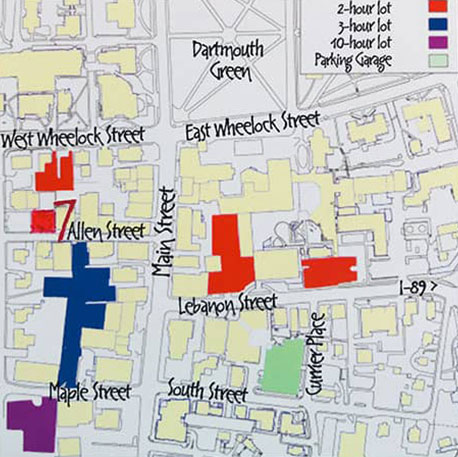
outside of office directions