When should my child be seen for an orthodontic evaluation?

December 11th, 2014

Thanks for asking! It really depends on the dental age of the patient rather than their chronological age. Usually a good time to have your child evaluated by an orthodontist is after the front permanent teeth have erupted into the mouth or if there appears to be extreme crowding of the teeth.

The American Association of Orthodontists recommends that children between the ages of seven and nine should be evaluated by an orthodontist. There are times when an early developmental treatment is indicated to correct situations before they become major problems. In these circumstances the patient will most likely benefit from a second phase of orthodontics when all of their permanent teeth have erupted.

Most full orthodontic treatment begins between ages nine and 14, and lasts from one to three years, with two years being the average. It’s important, however, that children be screened at an early age for Dr. Donald Neely and our staff to assess if your child can benefit from orthodontic treatment and when treatment should begin.

We hope this helps, and invite you to give us a call if you have any questions about your child’s treatment at Hanover Orthodontics.

I got my braces. Now what?

December 4th, 2014

You’ve taken the first step toward a healthier and more beautiful appearance by getting braces at Hanover Orthodontics, and you’re probably wondering what comes next. The first week is the period of biggest adjustment, and there’s a lot to learn in this short time. Don’t worry; in a few short days your braces will feel completely natural.

The first week

On the first day, your braces will probably feel very odd in your mouth; it will take time to get used to them. By the second day, you may feel some soreness or pain. If you are going to experience any pain, the second and third days are when it will happen. Most pain can be dealt with by taking an over-the-counter pain reliever, such as Tylenol.

What about sore spots?

Your cheeks and tongue are getting used to your new braces, just like your teeth are. You may develop sore spots where this soft tissue rubs against the harsh metal of your braces. The best way to avoid this and allow your mouth to heal is by covering the metal spot with orthodontic wax. Break off a small piece and roll it into a ball in your hands. Dry the metal of the braces with a cotton swab, then wrap the wax around the sharp spot to create a cushion.

What if they break?

Braces are held onto your teeth with special orthodontic glue. Once in a great while, part of your appliance may come loose from the surface of a tooth. This won’t harm anything; it will just be slightly inconvenient. Call our office right away and we will be able to glue the bracket back on.

Make sure you avoid hard items such as ice, brittle, and other hard candies, and don’t open packages with your teeth. These habits can contribute to braces popping off. Even fairly innocent-sounding items like popcorn or French bread can be a culprit, so avoid eating any hard foods, or cut them up into small pieces before consuming.

If you have questions about which foods to eat and avoid, or if your braces are more sore than expected, feel free to contact our Hanover, NH office and ask Dr. Donald Neely and our team. We’re more than happy to help!

Thanksgiving in North America

November 27th, 2014

Thanksgiving marks the start to the holidays; a season filled with feasting, indulging, and spending time with family and friends are always special. Thanksgiving is a holiday meant for giving thanks, and while this may seem like such a natural celebration, the United States is only one of a handful of countries to officially celebrate with a holiday.

Unlike many holidays, Thanksgiving is a secular holiday, and it is celebrated on the fourth Thursday in November in the United States. In Canada, it is celebrated on the second Monday of October, which is, oddly enough, much closer to a time when harvests were likely gathered. In addition to the different dates, the origins of the celebration also share different roots.

Thanksgiving in the United States

Giving thanks for a bountiful harvest are not new, but the modern day holiday in the US can be traced to a celebration at Plymouth in Massachusetts in 1621. This feast of thanksgiving was inspired by a good harvest, and the tradition was simply continued on. At first, the colony at Plymouth didn't have enough food to feed everyone present, but the Native Americans helped by providing seeds and teaching them how to fish, and they soon began to be able to hold a feast worthy of the name. The tradition spread, and by the 1660s, most of New England was hosting a Thanksgiving feast in honor of the harvest.

Canadian Thanksgiving

An explorer of early Canada named Martin Frobisher is accredited for the first Canadian Thanksgiving. He survived the arduous journey from England through harsh weather conditions and rough terrain, and after his last voyage from Europe to present-day Nunavut, he held a formal ceremony to give thanks for his survival and good fortune. As time passed and more settlers arrived, a feast was added to what quickly became a yearly tradition. Another explorer, Samuel de Champlain, is linked to the first actual Thanksgiving celebration in honor of a successful harvest; settlers who arrived with him in New France celebrated the harvest with a bountiful feast.

A Modern Thanksgiving

Today, Thanksgiving is traditionally celebrated with the best of Americana. From feasts and football games to getting ready for the start of the Christmas shopping season, Thanksgiving means roasted turkey, pumpkin pie, and green bean casserole. No matter how you celebrate this momentous day, pause for a moment to give thanks for your friends, family, and all the bounties you’ve received. Happy Thanksgiving from Hanover Orthodontics!


Dreaming of a stunning smile without using braces?

November 20th, 2014

Most of us aren’t born with a red carpet smile. And if you’ve thought about straightening your teeth but are apprehensive about doing so with traditional orthodontic treatment, Dr. Donald Neely and our team at Hanover Orthodontics want you to know there is another option – Invisalign®!

Invisalign is an ideal solution for most adults looking for a less noticeable way to achieve a better smile. In fact, Invisalign has increasingly become a very popular choice for adults looking for a more comfortable, convenient and cosmetically-appealing treatment for straightening their teeth.

Our team at Hanover Orthodontics is proud to offer Invisalign, which uses a series of invisible, removable and comfortable aligners that no one can tell you’re wearing, which allows you to smile more during treatment, as well as after. Not only are the aligners invisible, they are also removable, so you can eat and drink what you want; brushing and flossing is easier with Invisalign than with traditional braces.

Invisalign’s aligners are also comfortable, with no metal to cause mouth abrasions during your treatment. And no metal and wires usually means you spend less time at our office getting adjustments. Invisalign also allows you to view your own virtual treatment plan when you start, so you can see how your straight teeth will look when your treatment is complete!

A consultation with Dr. Donald Neely can determine if Invisalign is right for you. We encourage you to give us a call at our friendly Hanover, NH office if you’re interested in learning more about Invisalign or if you are ready to visit us for an initial consultation! We look forward to seeing you!

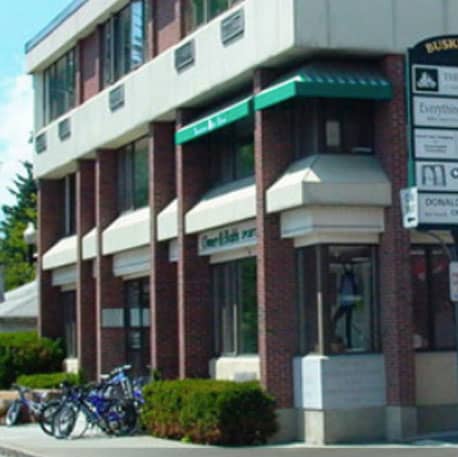
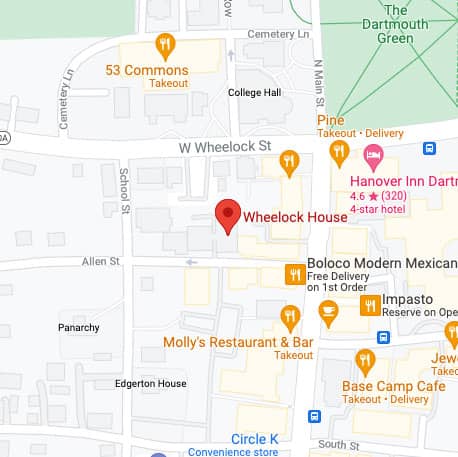
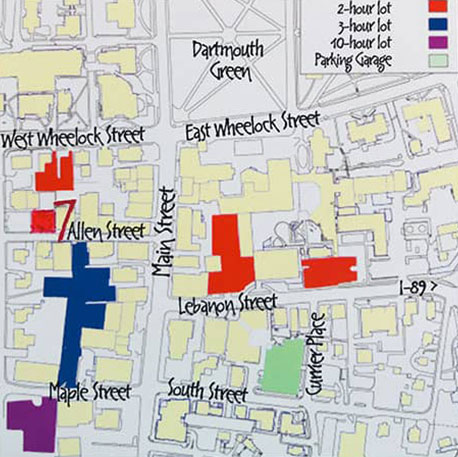
outside of office directions